Gear Boxes
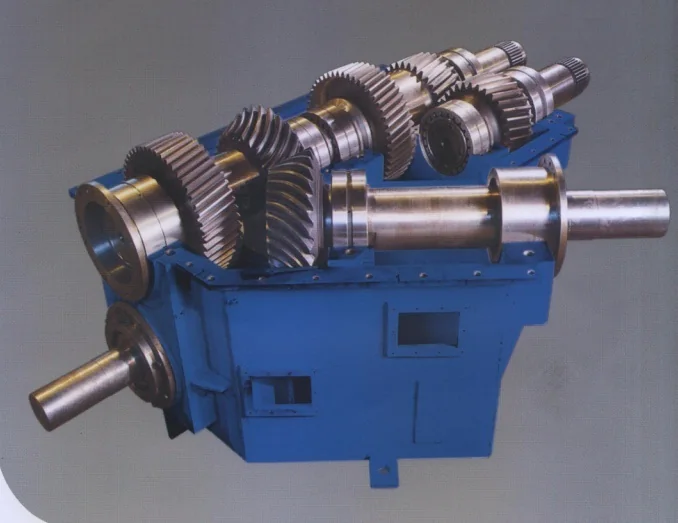
Heavy-duty mill gearboxes and reduction drives engineered around the torque, ratio, duty cycle and shaft arrangement of the stand they drive.
Discuss Your RequirementSpecified around the line—not selected from a generic list.
Mill drives need stable torque transmission, accurate shaft alignment and construction that can be serviced in the plant. NSG EA works from the required ratio, torque, duty cycle, shaft arrangement and installation envelope so the drive suits the stand rather than the stand having to suit the drive.
Engineering scope
- Application-specific ratio and duty selection
- Parallel, helical and bevel gear arrangements
- Multi-output and pinion-stand drive configurations
- Bearing, shaft and housing engineering
- Replacement and reverse-engineered assemblies
- Inspection, repair and refurbishment support
Typical applications
- 01Hot rolling mill stands and pinion drives
- 02Rolling and processing lines
- 03Straighteners, shears and material handling
- 04Special-purpose industrial machinery
What a mill gearbox has to handle
A rolling mill drive takes a shock load every time a bar enters the stand, then runs at high torque for the rest of the pass, often around the clock for a full campaign. Gear tooth design, bearing selection, shaft sizing and housing stiffness therefore have to be checked against the peak torque at bite, not only against the rated motor power.
Continuous duty also makes lubrication and heat a design question. Splash or forced lubrication, oil cooling, sealing against water and scale, and access for inspection are decided with the gearbox, not added afterwards.
Common gearbox arrangements in a mill
Reduction gearboxes sit between the main motor and the pinion stand, bringing motor speed down to roll speed. Combined reducer and pinion units split the drive to the top and bottom rolls in one housing, and multi-output gearboxes drive groups of stands from a single motor. Around the mill, bevel-helical and parallel-shaft units drive roller tables, shears, straighteners and handling equipment.
The right arrangement depends on the stand layout, the shaft heights and centre distances available, and whether the stands are individually or group driven.
Replacement, repair and reverse engineering
Many mills run gearboxes whose original supplier no longer supports them. A replacement can be built to the same mounting, shaft heights and centre distances so it fits the existing foundation and couplings without civil work. Where the housing is sound, a repair can cover new gears and shafts, new bearings and restoration of worn bearing bores, decided after a controlled inspection.
What to send us for a quotation
The more of this you can share, the faster we can come back with a firm scope.
- Motor power and input speed
- Required output speed or ratio
- Output torque and expected shock loads
- Shaft arrangement and direction of rotation
- Operating hours per day
- Mounting dimensions or foundation drawing
- Nameplate data or drawings of the existing unit, for replacements
Questions buyers ask early
Can a gearbox be engineered as a replacement?
A replacement can be developed from drawings, operating data or a controlled inspection of the existing assembly, subject to dimensional and duty verification.
Which data helps size a mill gearbox?
Motor power, input speed, output speed, torque, service factor, shaft arrangement, operating hours, shock load and mounting constraints are the key inputs.
What usually causes a mill gearbox to fail?
The common causes are lubrication problems—wrong oil, low level, contaminated oil or blocked cooling—misalignment with the motor or pinion stand, bearing wear and repeated shock overloads from cobbles. Inspecting the tooth contact pattern, the bearings and the oil condition usually points to the cause before a repair is planned.
Share it and we will come back on feasibility, scope and the data still needed.
Discuss your gear boxes requirement.
Share the application, product range, current equipment and performance objective. The conversation starts with your process—not a standard catalogue answer.