Twin Channel
Twin-channel transfer equipment that splits and steers finished bar from the mill delivery into the cooling bed at full rolling speed.
Discuss Your RequirementSpecified around the line—not selected from a generic list.
On a high-speed bar mill the finished bar leaves the last stand faster than a single path can absorb. A twin channel diverts alternate bars between two channels so the cooling bed fills evenly and the mill keeps rolling. Channel profile, switch timing, pinch-roll setting and the transition into the braking slide all have to match the section range and delivery speed.
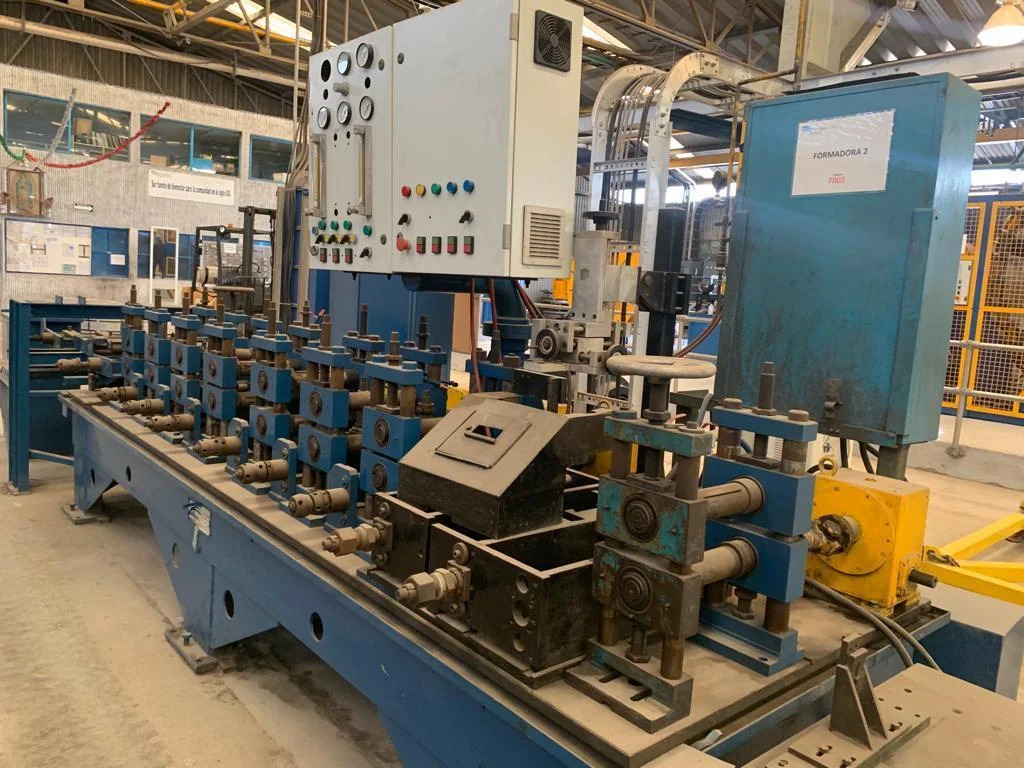
Engineering scope
- Twin-channel bodies, liners and transition pieces
- Switch and diverter arrangements with actuation
- Pinch roll and delivery pipe interfaces
- Channel profiles matched to the finished section range
- Wear liners and replacement channel sections
- Integration with braking slides and cooling bed entry
Typical applications
- 01High-speed TMT and rebar mills
- 02Multi-strand bar delivery ends
- 03Cooling bed entry sections
- 04Capacity upgrades on existing delivery ends
Questions buyers ask early
What does a twin channel do in a bar mill?
It splits the flow of finished bar leaving the mill into two paths so alternate bars are steered to different positions on the cooling bed. That lets the bed accept bar at the full rolling rate instead of limiting it.
Which data is needed to specify a twin channel?
Finished section range, delivery speed, bar length, the distance from the last stand to the cooling bed and the existing braking slide arrangement are the starting points.
Share it and we will come back on feasibility, scope and the data still needed.
Discuss your twin channel requirement.
Share the application, product range, current equipment and performance objective. The conversation starts with your process—not a standard catalogue answer.