Hydraulic Cylinders
Custom hydraulic cylinders configured around load, stroke, speed, mounting, pressure and the operating environment.
Discuss Your RequirementSpecified around the line—not selected from a generic list.
Hydraulic cylinder performance depends on more than bore and stroke. Rod sizing, mounting geometry, pressure, seals, guidance, cushioning and the surrounding structure all influence reliability. NSG EA evaluates these conditions as one application.
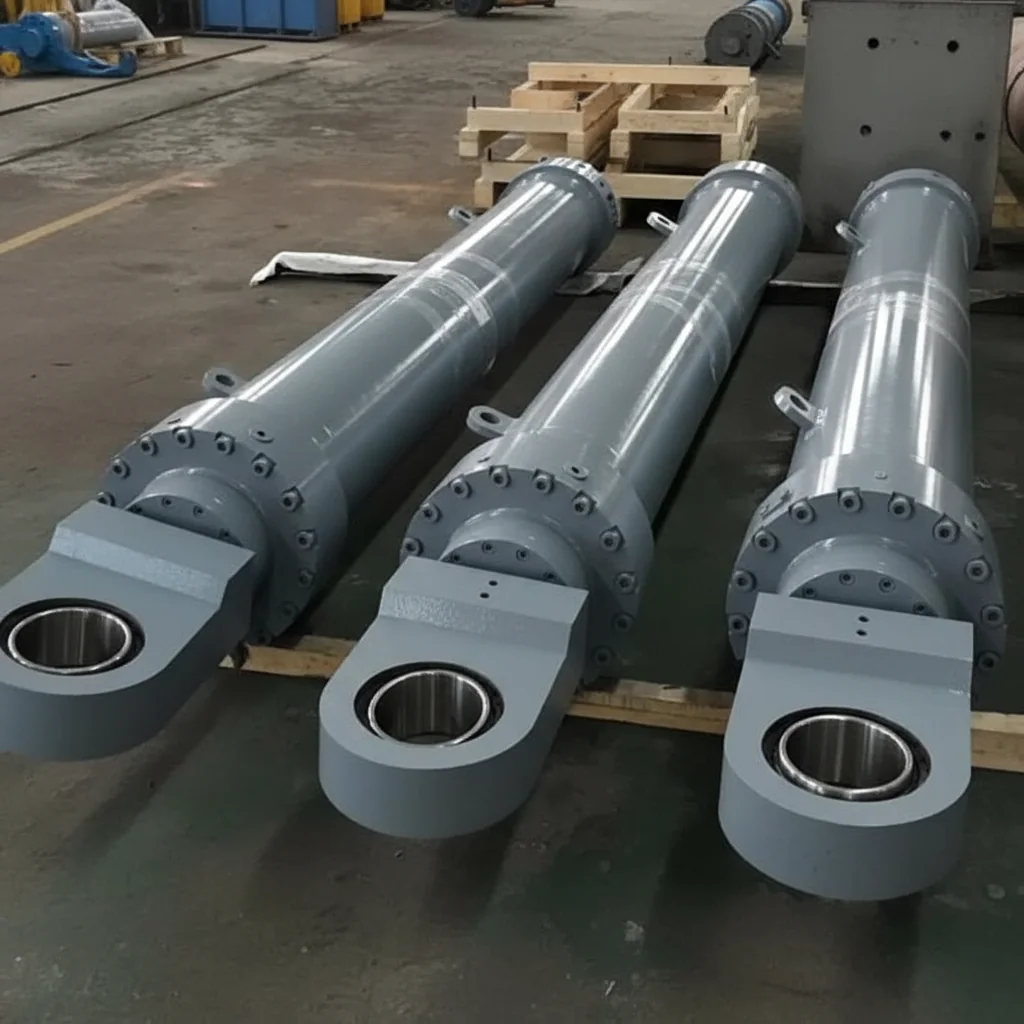
Engineering scope
- Custom bore, rod and stroke configurations
- Mill-duty and welded construction
- Application-specific mounting interfaces
- Seal and surface-finish selection
- Replacement cylinders and refurbishment
- Integration with hydraulic power and controls
Typical applications
- 01Rolling mill adjustment and positioning
- 02Bar handling and material movement
- 03Clamping, lifting and transfer systems
- 04Heavy industrial and special-purpose machinery
Where cylinders work in a rolling mill
Hydraulic cylinders do much of the positioning and moving in a mill: stand and roll adjustment, roll change, pinch rolls, tilting and lifting tables, transfer and kick-off equipment, and clamping. Most of them work close to hot stock, water and scale, which is a harder environment than a general machine shop.
What goes into a cylinder design
The bore follows from the force needed and the working pressure. The rod diameter is checked against buckling on long strokes and against side loads. The mounting style—clevis, trunnion, flange or foot—is chosen to match how the load moves, so the cylinder pushes in a straight line rather than bending.
Seals are selected for the temperature, speed and hydraulic fluid. The rod surface is finished to resist scale and wear, scrapers and rod protection keep dirt out, and cushioning at the end of the stroke protects the cylinder and the machine from impact.
Repair or replace
A leaking or damaged cylinder is first inspected: the barrel bore, the rod surface, the seals and the end caps. Depending on what is found, it can be resealed, have its rod refinished or replaced, or be replaced completely with a new cylinder built to the same mounting dimensions so it fits without changes to the machine.
What to send us for a quotation
The more of this you can share, the faster we can come back with a firm scope.
- Force or load to be moved
- Working pressure
- Bore, rod and stroke, if known
- Mounting type and dimensions
- Speed and duty cycle
- Operating temperature and environment
- Hydraulic fluid type
- Drawings or nameplate of an existing cylinder
Questions buyers ask early
What data is required for a custom hydraulic cylinder?
Load, working pressure, stroke, speed, mounting style, available dimensions, duty cycle, temperature and environmental conditions are the starting points.
Can an existing cylinder be replaced or repaired?
A repair or replacement path can be assessed from drawings, nameplate data and dimensional inspection of the existing unit.
Why do hydraulic cylinders in rolling mills leak?
Common causes are rod damage from scale, seals worn or hardened by heat, side loading from misalignment, and contaminated oil. Choosing seals for the working temperature, protecting the rod and getting the mounting alignment right prevent most leaks.
Share it and we will come back on feasibility, scope and the data still needed.
Discuss your hydraulic cylinders requirement.
Share the application, product range, current equipment and performance objective. The conversation starts with your process—not a standard catalogue answer.